
Identify the whole selection, not just the teams
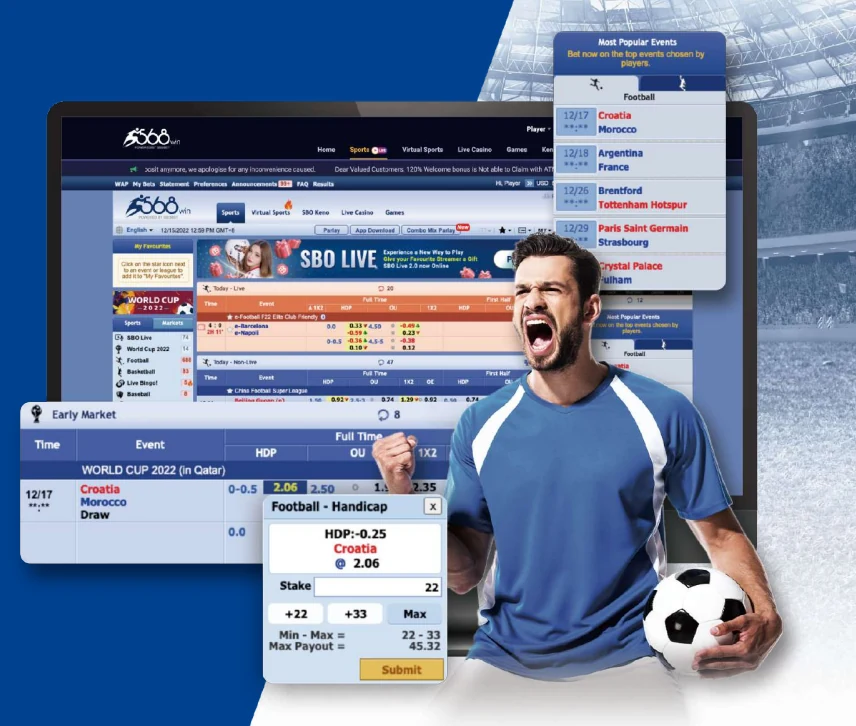
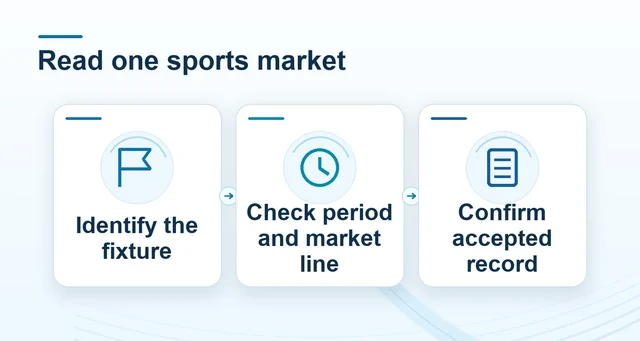
Start with the provider, event, competition and date. Then match the market, period and selected side. A match-result market, a handicap and a total are different questions about an event.
Read the full explanation
A first-half total is also different from a full-match total. Check whether the event is real sport, esports or a virtual fixture. Similar team names and familiar logos are not enough to identify the record.
The accepted ticket combines these details and is the starting point for any later comparison.
Read the line and odds as different fields
A handicap or total line defines the condition being evaluated. The odds describe the price offered for the selected outcome. The stake is the amount committed. Those three numbers should not be interchanged.
Read the full explanation
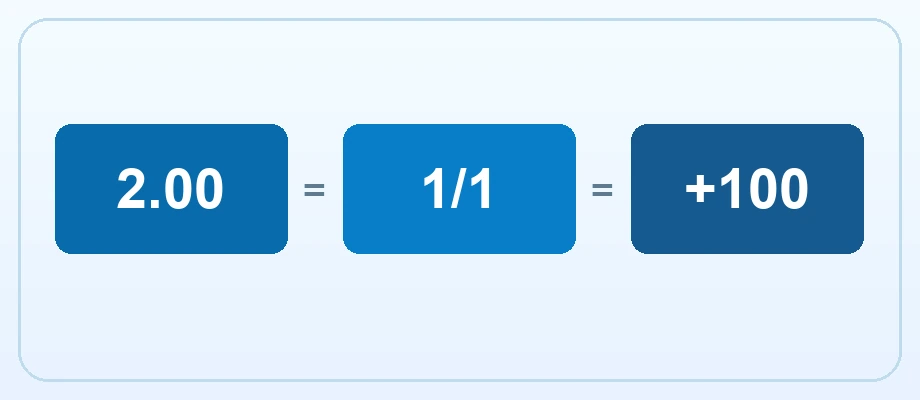
Record the odds format as well: decimal, fractional and regional displays express prices differently.
If you change the display setting, check the format explanation rather than comparing the raw number with a screenshot using another system. A changed screen price also does not rewrite an earlier accepted ticket by itself.
Separate total return from net profit
For a simple winning decimal-odds example with no adjustment, a RM20 stake at 2.50 gives RM50 total return: RM20 × 2.50. That total includes the original RM20, leaving RM30 above the stake.
| Example field | Value |
|---|---|
| Stake | RM20 |
| Decimal odds | 2.50 |
| Total return if won, without adjustments | RM50 |
| Amount above the original stake | RM30 |
Read the full explanation
It is not RM50 profit plus a second return of the stake. This arithmetic example does not predict the event result or describe every settlement type.
Half wins, void components, fees or other rule-specific adjustments require the ticket’s actual settlement details instead of the simple formula.
Distinguish acceptance from settlement
Before retrying an uncertain request, check whether the original ticket exists. A market can suspend or change while the interface is open, so a highlighted selection does not prove acceptance.
- SelectionThe market, line and odds you requested.
- AcceptanceThe final line and odds recorded on the accepted ticket.
- SettlementThe result applied under the named market rule.
Read the full explanation
After an event, a public score does not prove that every market has settled. Read the ticket status and the rules for its period, postponement, abandonment or result correction.
Do not borrow a settlement deadline or voiding rule from another provider. Record the time of the status you are querying.
Build a precise settlement enquiry
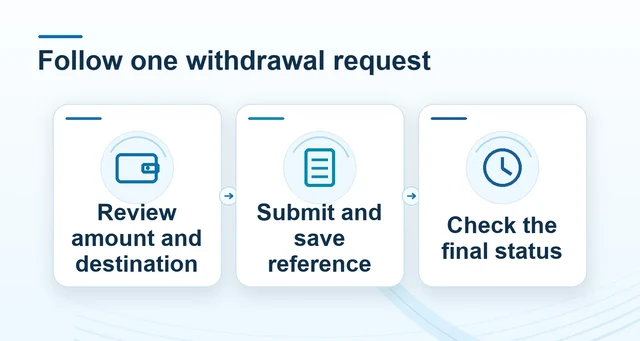
Send Winbox the provider, ticket number, event, date, market, period, selection, line, accepted odds and format, stake and displayed status. Explain which field does not match your understanding.
 Withdrawal support checklist
Read the full explanation
Keep the ticket and any rule excerpt together, with private details masked. If a settled amount is visible but a bank withdrawal is pending, supply the withdrawal reference separately.
Bonus turnover and agent commission are also separate calculations; a settled sports return cannot be reconstructed from either programme’s advertised percentage.
Total goals and both teams scoring are different tests
For a simple completed-period example, compare the three invented scores below. A 3–0 score has three goals but only one scoring team. A 2–1 score also has three goals and both teams scored.
| Invented score | Total goals | Over 2.5 condition | Both teams scored |
|---|---|---|---|
| 3–0 | 3 | Met | No |
| 2–1 | 3 | Met | Yes |
| 1–1 | 2 | Not met | Yes |
Read the full explanation
A 1–1 score has both teams scoring but only two goals. Thus Over 2.5 goals and Both Teams to Score Yes cannot be substituted for each other. A combined market can require both conditions together.
Match the exact period before using the comparison: first-half, second-half and full-period figures need their own scores.
Corners, cards, next goal and a named goalscorer require different event records; a final score alone cannot answer all of them.
Separate the review decision from ticket acceptance
IFAB assigns the final football decision to the referee; a video review can change whether a goal is recorded. Suppose a displayed 2–1 becomes 1–1 after a goal is disallowed.
| Observation | Check before another action |
|---|---|
| Market suspended or locked | The existing ticket, not repeated submissions |
| Submitted or pending | Whether an accepted record exists and its status |
| Score corrected after review | Period result and the matching correction rule |
Read the full explanation
The illustrated total changes from three to two, while both teams still have a goal.
That explains a result condition; it does not decide whether a particular in-play ticket was accepted in time or how a provider applies its correction rule.
Keep the official period result, incident time, accepted ticket time and product rule together. A broadcast can lag behind the event, so the moment you saw a goal is not necessarily when it occurred.
A penalty role belongs to a named player and a particular fixture
A first-goalscorer selection, an anytime-goalscorer selection and a tournament top-scorer selection are different markets. Identify the named player, team, fixture or competition and covered period before looking at a scoring record.
 Winbox sports: events, markets and ticket rules
Read the full explanation
The usual striker is not necessarily the penalty taker. A club role need not carry over to a national team, and a role can change through selection, substitution, injury or a coaching decision.
Use a dated team announcement and the actual starting or participation record rather than an old list of famous names.
Expected minutes, team tactics and the opponent also matter to the context; none guarantees that a penalty will be awarded, that the same player will take it or that a goal will be scored.
A penalty-taking role alone does not establish value at the offered odds. Check the provider's non-participation, substitute, own-goal and scorer-correction rules before interpreting a named-player ticket.
Keep a match penalty separate from a post-match shoot-out
IFAB's Law 14 permits a goal directly from a penalty kick during the match. Law 10 treats the penalty shoot-out as taking place after the match has ended.
| Observation | Record and rule to match |
|---|---|
| Named player scores within the covered period | Official scorer, period and selected market |
| Penalty shoot-out conversion | Post-match phase and any separate shoot-out market |
| Player never enters the match | Participation record and non-runner/substitute conditions |
| Goal removed or scorer corrected | Official correction and ticket settlement rule |
Read the full explanation
Those are different event phases; a successful shoot-out kick is not automatically another goal in a regulation-time market. The provider's named market still determines settlement, including any separately offered shoot-out product.
Keep the final score for the covered period and the official player/incident record together. If a review removes a goal or changes its credited scorer, retain that correction as well as the accepted ticket.
The table identifies the record needed; it does not impose one supplier's voiding or participation rule on every Winbox market.
Asian handicaps can include refunds and split results
A two-sided Asian handicap is different from a three-way match-result market, but its settlement need not be a full win or a full loss. Under the standard whole-line model, a level adjusted score refunds that component's stake.
| Invented line and result | RM40 components | Total returned; net result |
|---|---|---|
| −0.25; match drawn | RM20 refunded at 0; RM20 loses at −0.5 | RM20; −RM20 |
| +0.25; match drawn | RM20 refunded at 0; RM20 wins at +0.5 | RM60; +RM20 |
| −0.75; selected side wins by one | RM20 wins at −0.5; RM20 refunded at −1.0 | RM60; +RM20 |
| −1.0; selected side wins by one | Full RM40 refunded | RM40; RM0 |
Read the full explanation
A quarter line splits the stake equally between the adjacent whole and half lines: −0.25 is 0 and −0.5; +0.25 is 0 and +0.5; −0.75 is −0.5 and −1.0.
This splits an amount across two conditions on the same covered event, rather than creating two matches or two different periods.
The table uses an invented RM40 back selection at decimal odds 2.00, equal split components and no fees or other adjustments. A winning RM20 component returns RM40 including its stake; a refunded RM20 component returns RM20. That is why a half-win here returns RM60, not RM80, and a half-loss returns RM20 rather than zero. These are conditional arithmetic examples, not live Winbox odds or a universal voiding rule.
Retain the accepted signed line, covered period and result rule when comparing an actual ticket.