
State the assumptions before using a probability
A probability belongs to a defined outcome under stated rules. For independent rounds with unchanged probabilities, previous wins or losses do not make the next result due.
Read the full explanation
That assumption must not be applied blindly to every product: cards dealt without replacement change what remains in a shoe, a persistent feature meter may have rule-defined state, and a live sports event changes as play develops.
A random outcome is not automatically an independent outcome. Identify the selected game, event or draw before interpreting a history, and read any state-dependent feature separately.
A specific streak and a specific alternating sequence can be equally likely
Take four independent fair coin flips, used only as a mathematical illustration. There are 16 equally likely ordered sequences. HHHH has probability 1/16, or 6.25%; HTHT also has probability 1/16. Random does not require alternation.
| Specified four-flip sequence | Probability before the sequence | Next independent fair flip |
|---|---|---|
| HHHH | 1/16 = 6.25% | Heads: 50% |
| HTHT | 1/16 = 6.25% | Heads: 50% |
Read the full explanation
After HHHH has already happened, the next fair flip still has a 50% chance of heads. The chance of a streak somewhere in a longer record is a different calculation from the chance of one specified four-flip sequence.
Do not use this coin model as a slot hit rate, roulette probability or forecast for a particular Winbox game.
Separate a repeated number, a larger stake and extra coverage
For an illustrative draw with one uniformly selected four-digit result from 0000 to 9999, one exact number covers 1 of 10,000 outcomes.
| Illustrative entries | Distinct outcomes covered | One-position probability |
|---|---|---|
| 1234 once | 1 | 1/10,000 = 0.01% |
| 1234 twice | 1 | 1/10,000 = 0.01% |
| 1234 and 5678 | 2 | 2/10,000 = 0.02% |
Read the full explanation
Entering the same number twice still covers that one outcome; entering two distinct numbers covers two. At RM1 per entry, both two-entry examples cost RM2, but their coverage differs. Two numbers still leave 9,998 outcomes uncovered.
This model is about one exact-result position, not the combined prize tiers of an actual operator. Personal dates, repeated digits, hot/cold labels and a phone-versus-desktop display do not change this model’s probability.
Historical data describes a record, not a promised next result
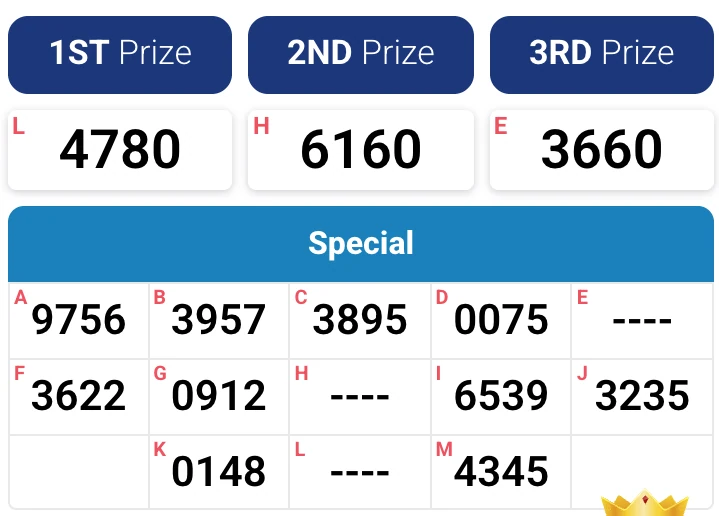
A frequency chart reports counts in a chosen period. Check its operator, dates, included prize positions and missing records before comparing numbers.
Read the full explanation
Finding a repeated ending after searching many possibilities is different from testing a prediction fixed beforehand. An AI label, a backtested formula or a screenshot of selected winners does not establish future accuracy.
For box or permutation products, also separate a total shared across arrangements from an amount charged per arrangement; neither a chart nor a prediction label supplies that price basis.
Do not buy a guaranteed-number claim or send an unlock payment to an unsolicited contact.
A streak alone neither proves nor disproves a game problem
RTP and house edge describe a mathematical model, not a debt owed to your session; the detailed slot guide explains return versus payout frequency. A short history can be uneven without proving manipulation.
 How to read a live-casino round and its record
Read the full explanation
Equally, saying that randomness can form clusters is not a certificate for an unverified game.
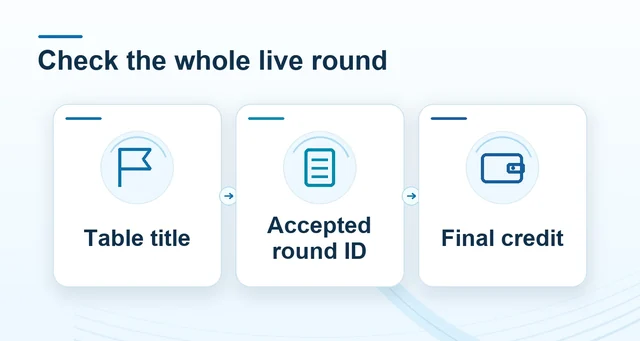
If a credited amount conflicts with the stated paytable, or a round record changes unexpectedly, keep the provider, complete title, version if shown, round, accepted stake and relevant rule.
Ask about that discrepancy rather than only reporting that a sequence felt unlikely.
Keep a limit independent of a forecast
Winning does not make the next independent round safer; losing does not create a repayment schedule. Changing a stake sequence changes the money exposed, not a game’s underlying probabilities. Continuing for longer is not a method for making an individual balance converge to RTP. Keep essential spending separate and stop at the time or affordable-loss limit set before the session.
If a countdown, near miss or recent win makes that decision harder, the presentation guide explains how to separate those cues from the amount actually recorded.
Compare the outcome being counted before comparing odds
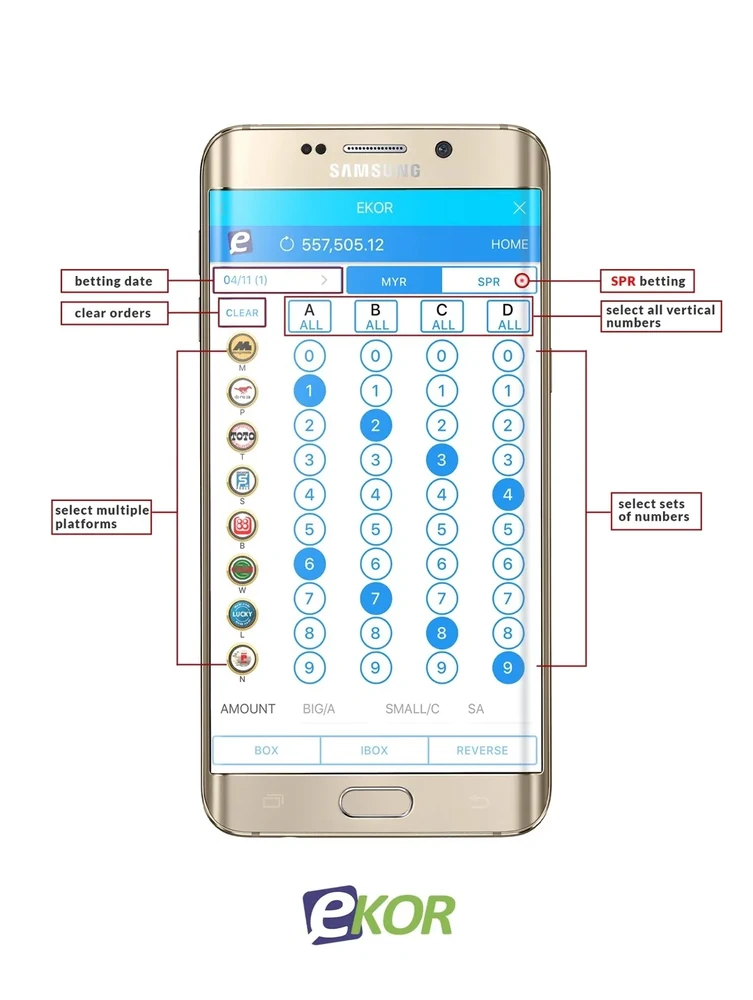
For one uniformly selected exact sequence, four decimal digits give 10 × 10 × 10 × 10 = 10,000 possibilities; six give 1,000,000. The table compares that single-position model only.
| Illustrative exact-result model | Possible sequences | One selected sequence |
|---|---|---|
| Four decimal digits | 10,000 | 1 / 10,000 = 0.01% |
| Six decimal digits | 1,000,000 | 1 / 1,000,000 = 0.0001% |
Read the full explanation
It does not calculate a multi-tier prize, paired-number jackpot, suffix entry or shared permutation product. A number of eligible prize categories and a number of distinct sequences are different counts.
Likewise, a larger stake on the same exact sequence does not create another distinct sequence. Read the product and coverage rules before treating an operator comparison chart as a probability calculation.
Read a crash multiplier separately from your accepted cash-out
In a crash-style format, a rising multiplier is a round display. Your return depends on an accepted wager and a cash-out processed under the selected game's rules, not on the largest number that later appears in its history.
| Illustrative RM10 wager | Total returned | Net result |
|---|---|---|
| Accepted exit at 2.00× | RM20 | +RM10 |
| Round ends without a valid exit | RM0 | −RM10 |
Read the full explanation
In the illustrative table, an accepted RM10 wager has a 2.00× cash-out returning RM20 including the original stake: the net gain is RM10. If the same round later reaches 7.50×, that does not turn the earlier return into RM75.
If no valid cash-out occurs before the round ends, the example returns zero and loses RM10. These are conditional accounting examples, not a Winbox title's payout promise.
Check the actual treatment of an exact threshold, maximum award, charges and interrupted connection. A finger tap or a frozen animation is not the server's acceptance record.
Auto cash-out is an exit instruction, while auto-bet places repeated wagers; they are different controls, and neither changes a round's underlying outcome distribution.
Random does not mean every multiplier has the same chance
An RNG supplies values that a game maps into outcomes. The final multiplier distribution can be weighted; a 100× stop need not be as likely as a 1.50× stop.
 Winbox stake progressions: cost, limits and recovery claims
Read the full explanation
Some implementations determine the stopping value before the animation begins, but the selected game's documentation must establish its actual method. Recent multipliers describe completed rounds.
For independent rounds with unchanged rules, several low results do not make a high result due. Selecting an earlier exit changes the condition for your return and its potential amount; it does not remove the game's mathematical edge.
An advertised predictor, special time of day or faster device does not establish knowledge of a hidden future stop. A completed-round verifier is a retrospective check, not a live forecast.
RNG generation and a commit–reveal check answer different questions
Random generation and a system labelled provably fair are not mutually exclusive: random generation can supply the seeds used by a commit–reveal process.
 Slot rules: RTP, volatility, paylines and features
Read the full explanation
Where such a process is provided, retain the commitment published beforehand, the subsequently revealed seed, any client input and round counter used, and the documented transformation into an outcome.
Checking a seed against its earlier commitment is different from reproducing the final multiplier using all those inputs.
Matching the disclosed calculation checks consistency; it does not by itself establish unbiased seed selection, statistical randomness, the game's return percentage, timely cash-out processing or payment to your bank.
A hash copied from a result screen without its earlier commitment and documented calculation is not a complete verification. Use the selected game's own disclosed method rather than an unknown predictor download.
This explains what to ask for; it does not certify a Winbox game or claim that every title exposes a seed verifier.
Keep outcome, exit and payment evidence in separate records
For a disputed multiplier round, keep the complete title, provider, round identifier, accepted amount, requested exit setting, status and timestamp with timezone.
- Outcome
- The round identifier and recorded multiplier.
- Exit
- The status or accepted time of your exit request.
- Wallet
- The wallet entry linked to that round.
Read the full explanation
Add the exact error and the device/browser version if a connection failed. Preserve the account history before refreshing; a screenshot of the last visible multiplier alone cannot show when an exit reached the service.
Ask support which server record governs the decision and which interruption rule applies.
A verified outcome calculation does not settle a separate cash-out-timing dispute, and an account award does not establish that a later withdrawal reached the receiving bank.
Follow the matching record through the game, account and payment stages instead of repeating a wager or transfer as a test. Never give a verifier or unsolicited helper your password, OTP or banking login.
Questions, answered
Does doubling one 4D number give the same coverage as two different numbers?
No. In the single-position, uniform 0000–9999 example, repeating one exact number still covers one outcome. Two distinct numbers cover two outcomes, with additional cost and 9,998 outcomes still uncovered. Actual prize tiers and box allocation need the selected product’s rules.