
Find the rules for the exact game version
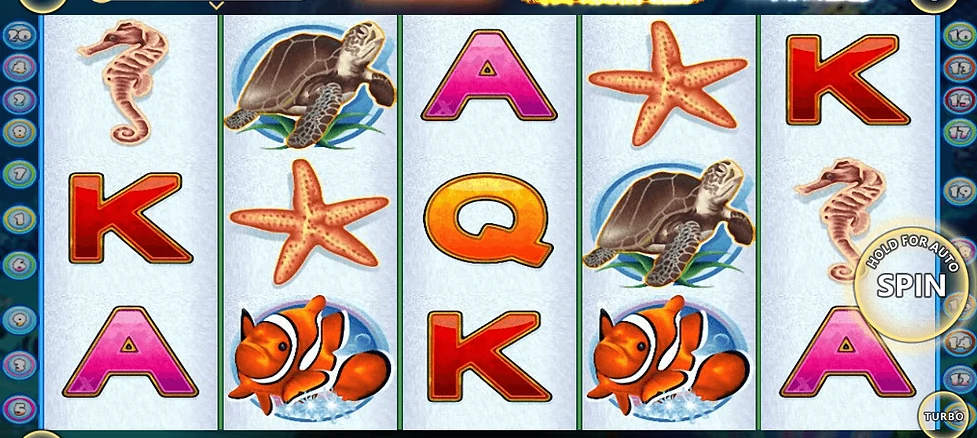
A provider tile identifies a catalogue entry, not the rules of every game from that provider. After Winbox login, open the selected title's information or paytable panel before starting.
Read the full explanation
Record its name, provider and any displayed version identifier if you need support later. Read the minimum and maximum stake, the currency and the cost shown for one action.
A similarly named game or a screenshot from another website may use different settings. The rules inside the actual title are the place to check its stated RTP and feature conditions.
RTP describes a long-run model
RTP means return to player. A stated 96% RTP describes the game's theoretical return across a very large amount of play under its rules; it does not promise that a RM100 session returns RM96.
 Responsible use and personal limits
Read the full explanation
Your session can finish above or below the starting balance, including losing it. For the same mathematical model, 100% minus 96% gives a 4% theoretical house edge. That subtraction is not a prediction of your next loss.
A published RTP also does not tell you when a feature will trigger or whether a particular spin will win.
Volatility is different from the return percentage
Volatility describes how uneven outcomes can be. Two games with the same stated RTP can distribute results differently, with different sizes and frequencies of awards.
- RTP
- Describes long-run average return for a game configuration.
- Volatility
- Describes how uneven or spread out the payouts can be.
Read the full explanation
A high-volatility label is not a promise of a large payout, and a low-volatility label does not make a balance safe. A short winning or losing sequence cannot establish the game's long-run return.
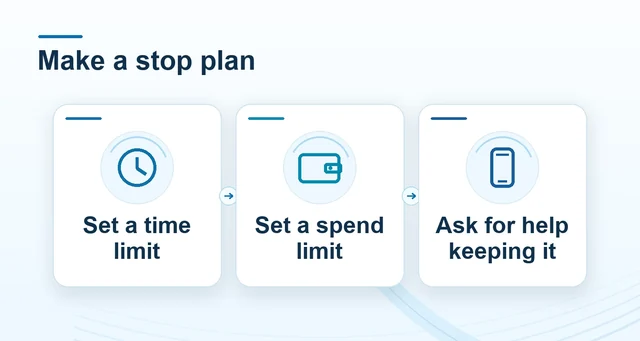
Do not treat several losing spins as evidence that a win is now due, or increase the stake to recover a previous loss. Set a money and time limit before opening the game.
Read the total stake and symbol rules together
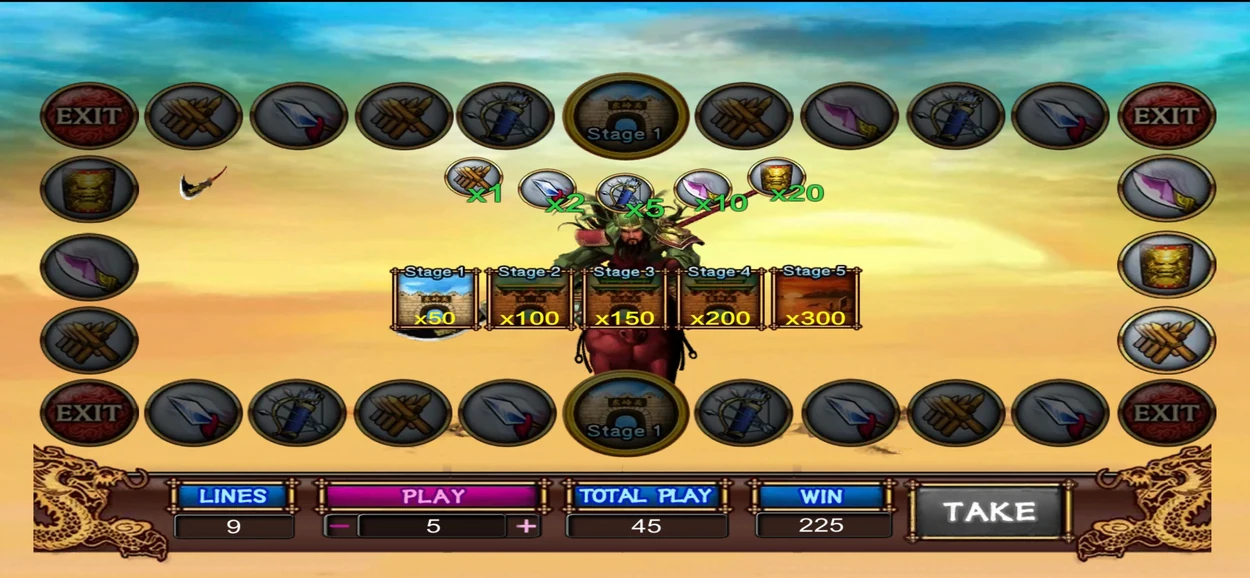
The total charged for a spin may depend on stake settings, active lines or other game options. Check the displayed total instead of assuming a small unit value is the full cost.
| Term | Meaning | Check before starting |
|---|---|---|
| Payline | A defined matching pattern | Active patterns, direction and total stake |
| Ways / clusters | Different matching structures, not more lines | Required reels, counts or adjacency |
| Wild | A substitution symbol under stated rules | Excluded symbols and any multiplier |
| Scatter | A separately defined award or trigger symbol | Required count and allowed positions |
Read the full explanation
Paylines, ways and cluster systems are different arrangements; use the paytable to identify which combinations count and how they are evaluated. A wild may substitute only for specified symbols.
A scatter may activate a feature only under its listed conditions. Do not apply a three-scatter rule from one game to another without checking it.
Distinguish game features, demos and promotions
Free spins inside a game are not automatically the same as a promotional free-spin award. Read the trigger, number of spins, stake basis and any purchase cost shown for the game feature.
 Read bonus turnover and withdrawal rules before claiming
Read the full explanation
A paid feature purchase is a wager with a cost, not a shortcut to guaranteed profit. Demo balances are virtual and are not withdrawable cash.
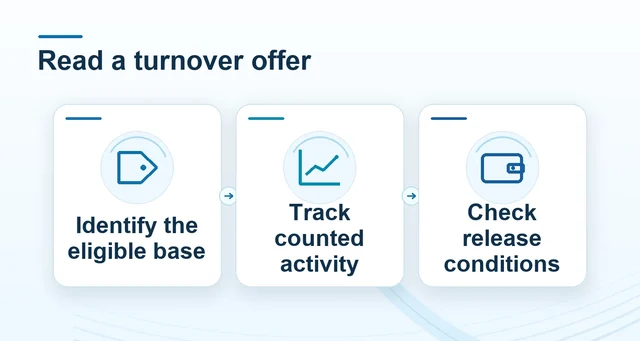
A Winbox promotion can impose separate eligible-game and contribution rules, so check those before assuming a feature counts.
If a completed round appears unresolved, preserve the round identifier and report it rather than starting several duplicate actions.
A free-spin sequence is a series of reel actions awarded under a game or offer rule. A bonus round is a broader special feature and may include free spins, a selection screen or a wheel. Neither label proves greater value than the other. Check entry cost, trigger, stake basis, multiplier behaviour and the final credited total. Promotional free spins can also have separate conversion or withdrawal conditions; a feature’s visual name does not remove them.
A progressive jackpot is a separate prize system
A fixed jackpot has a prize defined by the rules; a progressive jackpot can grow through contributions under its own funding rules. The displayed pool is not your balance.
| Display | What it describes | What to verify |
|---|---|---|
| Fixed jackpot | Rule-defined prize | Trigger and prize units |
| Progressive pool | A funded prize that can grow | Eligibility, contribution and reset |
| Account balance | Your recorded account funds | Credited result and withdrawal status |
Read the full explanation
Check which game and stake options qualify, how a winner is determined, whether a separate contribution is charged and what happens after a win or a cap is reached.
A word such as Grand, Mega or Jackpot does not by itself establish a progressive pool.
Do not assume that maximum stake is always required: eligibility belongs to the exact game’s rules, and increasing a stake does not guarantee the prize.
Distinguish a theoretical RTP from a measured return
For a completed set of records, observed return is total returned amount ÷ total accepted stakes × 100.
| Measure | Illustrative calculation | Meaning |
|---|---|---|
| Observed return | 960,000 ÷ 1,000,000 × 100 = 96% | Describes that completed record set |
| Recorded difference | 1,000,000 − 960,000 = RM40,000 | Not a guaranteed future loss or audited profit |
Read the full explanation
If RM1,000,000 was staked and RM960,000 returned, that set has a 96% observed return and a RM40,000 difference before other charges or adjustments.
It is not proof that a game’s theoretical RTP is 96%, and that difference is not an operator’s audited profit.
The theoretical percentage comes from the game’s outcome probabilities and corresponding payouts, which can be checked against testing or simulation.
In the simple 96% model, the complementary expected house edge is 100% − 96% = 4%; it is an expectation, not a guaranteed session deduction or business profit.
A short session can differ greatly from it; neither the observed percentage nor the stated model promises the next result.
The same return percentage can have different payout frequencies
Consider two simplified mathematical models, each costing RM1 per round. Model A returns RM1.20 with probability 80% and zero otherwise. Model B returns RM12 with probability 8% and zero otherwise.
| Hypothetical model | Payout probability | Return when paid | Expected return per RM1 |
|---|---|---|---|
| A | 80% | RM1.20 | RM0.96 |
| B | 8% | RM12 | RM0.96 |
Read the full explanation
Both have expected return RM0.96 per RM1, but their payout frequencies are 80% and 8%, not 96%. The table describes hypothetical models, not a Winbox game or a forecast.
It shows why RTP cannot tell you a hit rate, the length of a losing sequence or how long a balance will last. A volatility label alone does not supply those exact probabilities either.
Check the selected configuration before comparing percentages
A game can have different editions or supported configurations. Compare the provider, complete title and information panel for the version actually opened; do not transfer a percentage from a similarly named review.
 Pragmatic Play on Winbox: slot and live entries explained
Read the full explanation
If a stake option, feature purchase or jackpot eligibility changes the applicable rules, read that option’s cost and return information separately.
A larger stake is not a general method for improving RTP, and a near-miss animation is not evidence that the next random round is due to pay.
A higher stated percentage or lower volatility label does not make an expiring offer safe to complete or make a paid feature risk-free.
Questions, answered
Does a jackpot meter mean that amount is available in my account?
No. It displays a prize-system value. A personal award needs a qualifying result and credited record; a pool display alone is neither an individual win nor a withdrawable balance.
Is 96% RTP the same as a 96% chance of receiving a payout?
No. RTP describes expected returned value relative to the stake under a model. Payout frequency is a different probability. Two models can both return 96% in expectation while paying at very different frequencies; neither predicts your next result.