
What to check
In a simple fair walk with one-unit steps, starting at 4 and stopping at either 0 or 10 gives a 4-in-10 chance of reaching 10 first. A house edge and changing stakes invalidate that simple calculation.
Keep the stopping points in the example
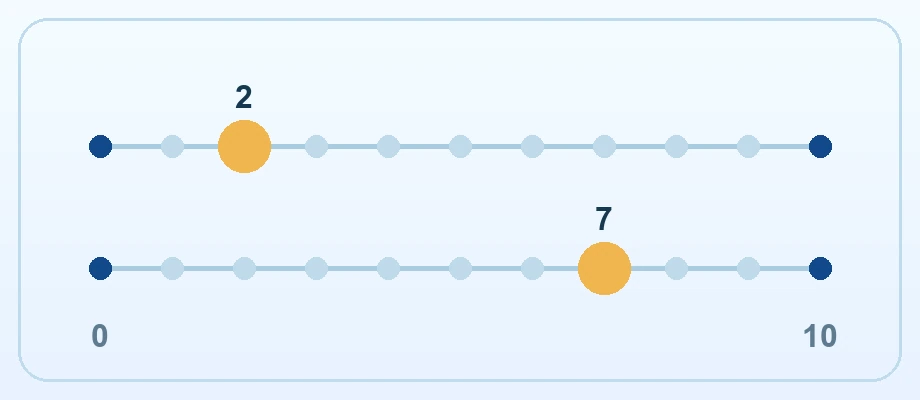
In a fair walk with one-unit steps and absorbing limits at zero and ten, a starting balance of two reaches ten first with probability 2 in 10. Starting at seven gives 7 in 10.
Read the full explanation
Those figures depend on equal step probabilities and unchanged limits. With five successive unit losses, an initial balance of five is exhausted. A two-unit stake can hit a floor before the same number of losses.
Change one assumption at a time
If a model loses more often than it gains on equal steps, the chance of reaching the upper boundary falls from the fair-walk calculation for that setup. For a finite session, a time limit can end a run before either boundary.

Read the full explanation
A stake cap can end a progression that calls for a larger amount. Track the point where each example stops so the totals remain comparable.
How to use the record
The example explains how a finite balance can run out even if some rounds are profitable. A bigger stake means the same balance survives fewer consecutive unit losses. Set a firm stopping point independently of the model and keep earlier losses in the same session record if you switch games.