
Start with three faces, then read the selected area
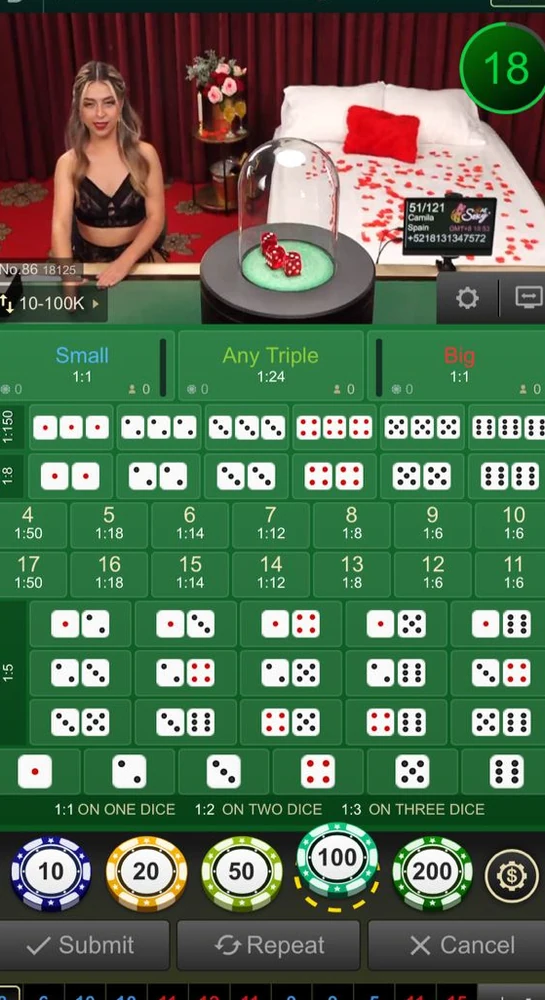
Sic Bo uses three six-sided dice. A total concerns their sum; a combination concerns particular faces. In Evolution’s Super Sic Bo example, Small means totals 4–10 and Big means 11–17, with any triple excluded from both.
| Dice | Total | Small/Big in this model |
|---|---|---|
| 1–2–3 | 6 | Small |
| 2–2–2 | 6 | Neither: triple |
| 4–5–6 | 15 | Big |
| 5–5–5 | 15 | Neither: triple |
Read the full explanation
Thus 2–2–2 totals six but does not win Small in that model. The name Sic Bo is a family label: a multiplier edition and First Person presentation need their own full title.
The examples here explain the stated model, not which Winbox tables are enabled.
Total, face and pair conditions are different tests
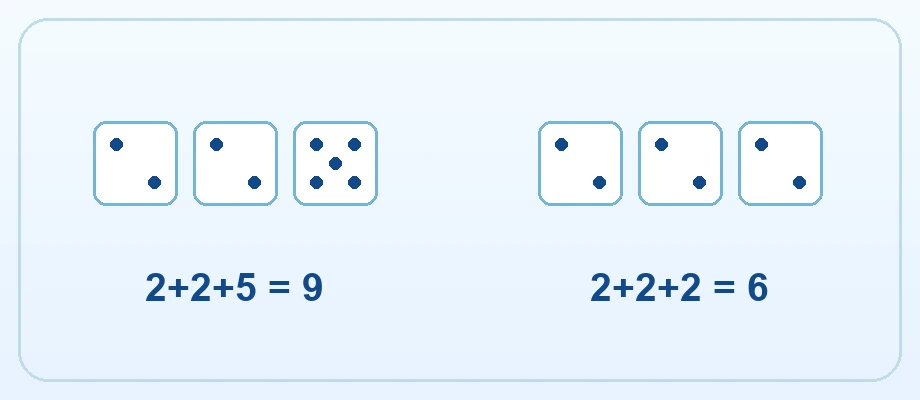
A specific total of ten is not a request for a die showing ten: no die has that face. A selected face can appear once, twice or three times.
Read the full explanation
A specified double, a specified triple, Any Triple and a two-face combination describe different matches. For example, 2–2–5 contains two twos and the faces two and five, but is not a triple; 2–2–2 is a triple of twos.
Whether a specified double also pays on its triple follows the selected rulebook. Do not assign the same payout to these overlapping descriptions.
Count ordered outcomes before comparing probabilities
For an independent fair-dice illustration, there are 6 × 6 × 6 = 216 equally likely ordered results. The arrangements 1–2–3 and 3–2–1 are different ordered results even though both total six.
| Model condition | Matching results / 216 |
|---|---|
| Small, excluding triples | 105 / 216 |
| Big, excluding triples | 105 / 216 |
| Any Triple | 6 / 216 |
| Triple 2–2–2 | 1 / 216 |
| Total 10 | 27 / 216 |
Read the full explanation
Enumerating all results gives 105 Small-eligible results and 105 Big-eligible results after excluding triples. Any Triple covers six results; one specified triple covers one. A total of ten covers 27.
These counts describe different events, not a strategy ranking or a complete return calculation. A win probability alone cannot determine value without the applicable payout and charges.
Keep base result, multiplier and total cost separate
A highlighted multiplier spot is not enough: the accepted selection must also satisfy its winning condition. Add the amount on every active area before interpreting a return.
 How to read a live-casino round and its record
Read the full explanation
In an invented example, RM3 on each of four areas costs RM12. If the account records RM9 total returned and no other charge, the net change is −RM3, regardless of the largest animation.
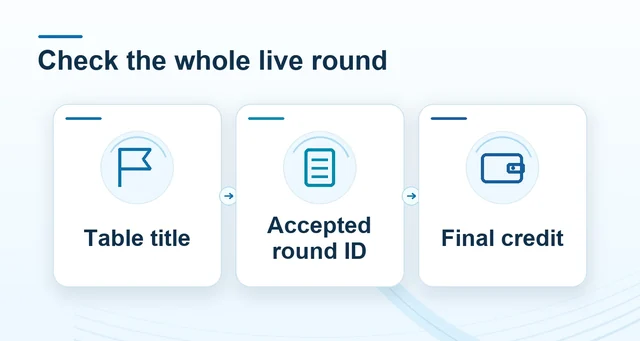
Keep the three faces, selected areas, accepted amounts, round identifier and credited return together. A road map describes completed results; it does not make the next triple due.
For an unresolved result, use Winbox support with the original round rather than repeating a transaction to test it.