
What to check
That is data work. Prediction is a separate claim and needs performance on unseen draws against a sensible baseline, with the same operator and format throughout.
Clean the archive before testing a claim
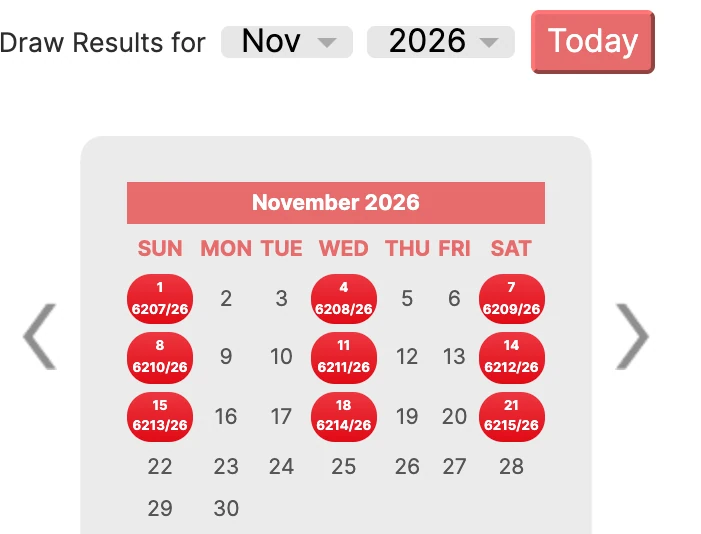
Store four-digit results as text so 0042 stays four characters. Choose one operator and prize position. Standardise the date and use the draw identifier to find duplicate or missing rows.
Read the full explanation
A tool can sort records or flag bad formatting. A prediction claim needs a different test.
Test on draws the model has yet to see
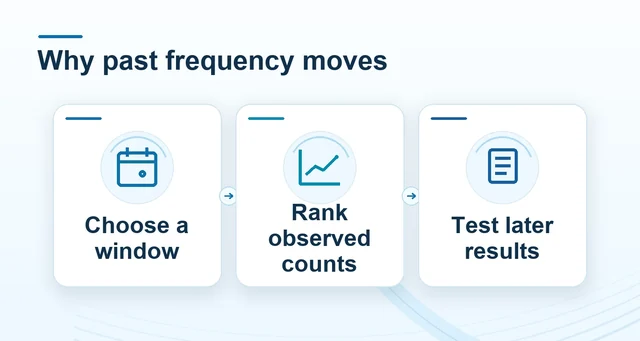
Imagine using January to March to select 20 exact orders and April to test them. Freeze the 20 picks before opening the April results.
 Why a list of hot 4D numbers can be misleading
Read the full explanation
Count every eligible draw, including the misses, then compare with a simple baseline using 20 fixed orders. In a uniform model with one qualifying result, both lists cover 20 of the 10,000 possible orders per draw.
If the model changes its choices after seeing April, use a later period to evaluate the new rule. Give the cost and prize coverage of any product separately from the model’s hit count.
How to use the record
If a model selects the most frequent numbers from an archive, judge it on a later period that was not used to choose them. Look for missing dates, leading zeroes lost in a spreadsheet and results mixed across operators. In an independent uniform model an annotated archive does not make a particular number due.